The inheritance dilemma
Inheriting a property should be a cause for gratitude and security for the future. Yet for many families in Spain, it becomes a bureaucratic and tax nightmare. It's not uncommon to hear stories of heirs who have to take out a personal loan — or even renounce the inheritance altogether — simply to pay the taxes the state demands for something that already belonged to their family.
If your parents own a property, especially a valuable asset in areas like the Marina Alta, there are two paths: the path of ignorance (which Hacienda loves) and the path of strategic planning.
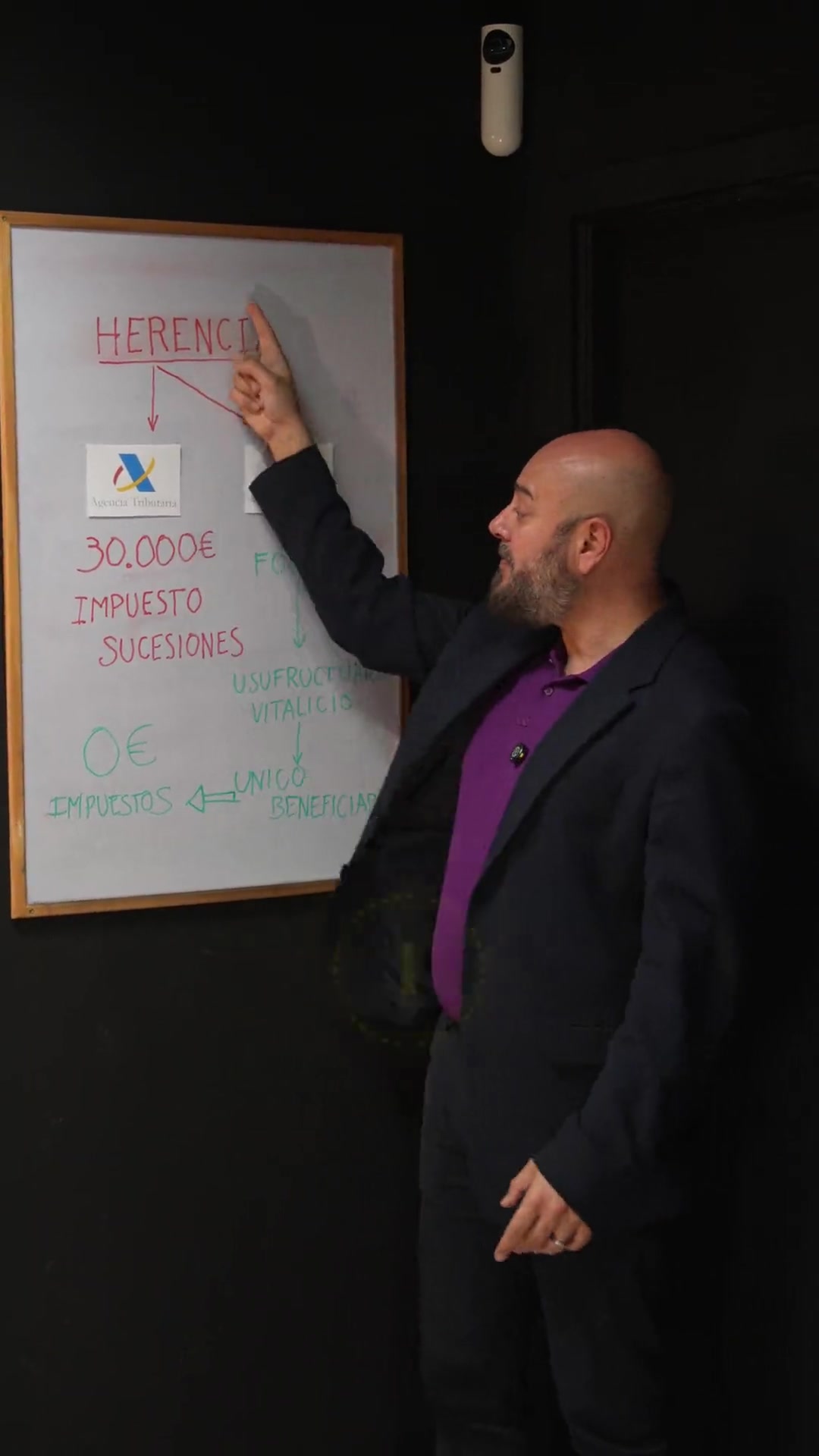
Path A: Hacienda's feast (up to 30,000 euros in costs)
This is the default scenario for those who don't plan ahead. When the parents pass away, the children inherit the property "all at once". In this process, three tax fronts are activated that can devour your savings:
- Inheritance tax: Although some regions like the Comunidad Valenciana offer significant exemptions, if certain requirements or deadlines aren't met, the bill can be astronomical. - Municipal capital gains tax (IIVTNU): The local council claims its share of the increase in land value since your parents bought the house. - Administrative costs: Notary, Land Registry and professional fees to "clean up" the title.
Before you can put the key in the door or hang up a "For Rent" sign, you could have spent over 30,000 euros. You're literally paying for what's already yours.
Path B: the usufruct and bare ownership structure
There's a scenario that Hacienda doesn't tend to advertise: lifetime planning through splitting of ownership.
When the inheritance is structured intelligently, the parents can gift the bare ownership to their children while retaining lifetime usufruct for themselves.
What does this mean? The children already own the "shell" of the property, but the parents keep the right to use and enjoy it (live in it or rent it out) until the end of their days.
The tax advantage: When the usufructuary passes away, the child automatically consolidates full ownership with a minimal tax burden — which in many cases can be 0 euros if the applicable exemptions in 2026 have been correctly applied.
The second blow: selling after inheritance
Inheriting is only half the problem. If you decide to sell the property to divide the money or invest in another asset, Hacienda is waiting for you again with income tax on capital gains. If the value you declared when inheriting was very low to "save" on inheritance tax, the difference from the sale price will be enormous, and Hacienda will charge you between 19% and 28% on that profit.
Investing in professional advice in the Marina Alta isn't an expense — it's the only way to ensure the sale value stays in your family and not in public coffers.
What I couldn't tell you in the 60-second video: the Cadastral "reference value"
For some time now, and fully in force in 2026, Hacienda no longer asks how much you think the house is worth. There is now the Cadastral reference value.
This value is the minimum taxable base on which you'll pay taxes, regardless of what you put in the deed. In the Marina Alta, where prices have risen sharply, this reference value tends to be high. If you inherit an old house that needs renovation but the Cadastre says it's worth a lot, you'll pay taxes on a value that "isn't real".
The key to paying less is to challenge that value through a professional appraisal before settling the tax. It's a technical move that 90% of heirs overlook — and it saves thousands of euros on the spot.
Table: comparison of inheritance scenarios
| Concept | Unplanned scenario | Strategically planned scenario |
|---|---|---|
| Inheritance tax | High (based on taxable amount) | Minimal / 0 euros (via bare ownership gift) |
| Municipal capital gains tax | Mandatory after death | Deferred or minimised |
| Control over the property | Blocked until taxes are settled | Continued use by the parents |
| Subsequent sale | High income tax burden | Optimised based on allocation value |
Frequently asked questions (FAQ)
1. Is it better to inherit or have the house gifted during my parents' lifetime?
It depends on the autonomous community and the total estate. In the Comunidad Valenciana in 2026, there are powerful exemptions for both gifts and inheritances, but gifting bare ownership is generally the cleanest route to avoid future surprises.
2. What happens if I inherit with my siblings and one wants to sell but the other doesn't?
That's the most common conflict. The ideal approach is to arrange a professional sale where an expert in the Marina Alta manages the market listing to maximise the price and minimise the tax impact for all heirs.
3. Can I inherit a house and pay zero tax?
Under certain conditions of kinship, habitual residence and estate limits, it is possible to reach a tax bill of 0 euros — but it requires impeccable management of the deadlines (you have 6 months to settle).