Does your money work for you, or are you a slave to your purchases?
At school they taught us to add and subtract, but they forgot the most important operation for our freedom: telling the difference between an asset and a liability. Most people spend their lives "passing" academic exams while spectacularly failing at financial health, simply because they confuse these two concepts.
If you want to stop working for money and start building solid wealth, especially in markets as stable as Marina Alta, the first step is understanding what you're really buying when you pull out your credit card.
The great consumption trap: why does your new car make you poorer?
Many people believe that buying a high-end car or the latest iPhone is "investing" in their status. Nothing could be further from the truth.
The new car (liability 10/10): A car loses 10% to 20% of its value the instant its wheels hit the tarmac outside the dealership. It's a money pit: insurance, fuel, maintenance, and depreciation. Unless that vehicle is used directly to generate income (like professional transport), it's a textbook liability.
The iPhone 17 (liability): It's cutting-edge technology, yes. But if you only use it to scroll through social media, it's money that will never come back. It only becomes an asset if it's the tool you use to create content, manage your business, or invest.
The nuance of education: is a master's degree an asset?
Here we enter tricky territory. A qualification is not an asset simply because you paid for it. A diploma hanging on the wall that doesn't translate into improved income-generating skills is, technically, a liability (money spent that doesn't return). However, if that master's degree helps you advance your career or launch a real estate project, it becomes the best possible investment. Knowledge is only power when it's applied.
Real estate: the king of assets
Here we reach the key point. While a car rusts and a phone becomes obsolete in two years, real estate — when bought well — is the ultimate asset.
Why? Because it meets the "triple crown" of investing:
- Generates passive income: Through rental. - Grows in value: It appreciates over time (capital gains). - Is tangible: It's not a number on a screen; it's a real asset in a physical market.
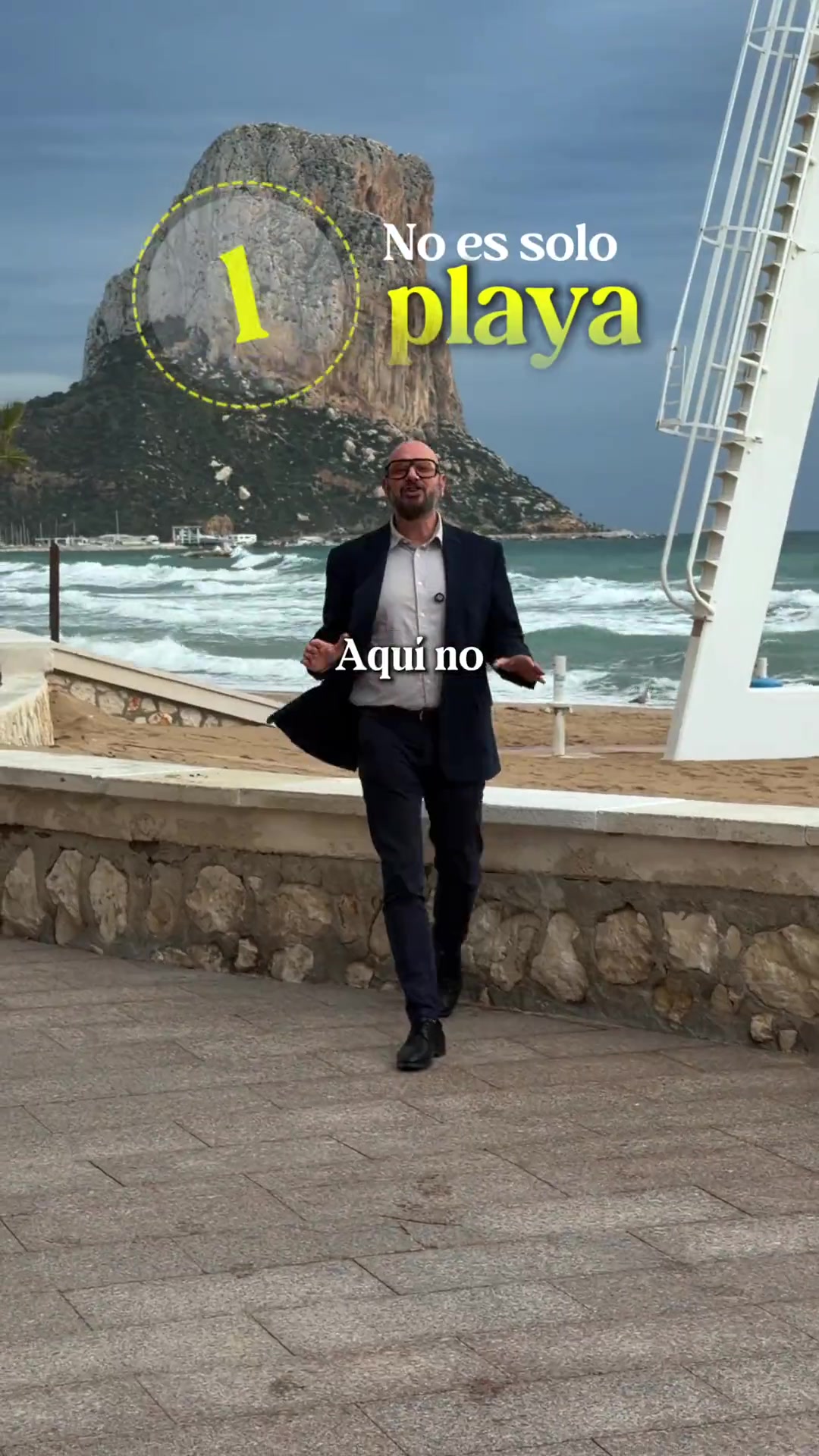
Investing in Marina Alta (Denia, Jávea, Teulada) is the perfect example of buying assets. You're not just buying a home; you're buying a stake in one of Spain's most resilient markets. In 2026, where fiat money is volatile, owning "bricks" in an area with high international demand is the difference between having savings and having wealth.
What I couldn't tell you in the 60-second video: the concept of "net asset"
In the video we discussed assets and liabilities in isolation, but there's a secret that the top investors in Marina Alta have mastered: positive leverage.
If you buy a 250,000 EUR property with a mortgage, you technically have a debt (a liability). However, if that property rents for an amount that covers the mortgage, taxes, and still leaves you 300 EUR net per month, you've turned a debt into a net asset.
This is the "honors" level of financial education: using the bank's money to buy an asset that pays for itself and, on top of that, increases your net worth every month. The education system wants you to save; real life asks you to accumulate assets that produce while you sleep.
Table: what are you really buying?
| Object | What is it? | Why? |
|---|---|---|
| Luxury car | Liability | Loses value and generates maintenance costs. |
| Rental property in Denia | Asset | Generates monthly rental income and appreciates in value. |
| Real estate education | Potential asset | Only if you apply the knowledge to invest. |
| High-end watch | It depends | Only if it's a collectible piece that appreciates in value. |
Frequently asked questions (FAQ)
1. Is the house I live in an asset or a liability?
According to Robert Kiyosaki's strict definition, it's a liability because it takes money out of your pocket every month. However, in areas like Jávea, where appreciation is so high, it can be considered a long-term wealth asset.
2. How can I start buying assets with little money?
Start with the cheapest asset: your education. Learn about the real estate market in Marina Alta, save for your first deposit, and use bank leverage so that your first asset doesn't depend solely on your savings.
3. Is it worth buying a car for Uber in 2026?
If the numbers add up and the car pays for itself through its activity, it's an asset. But remember: a car always depreciates, while a property on the Mediterranean coast tends to appreciate.